Thor's Hammer of Awe, Stainless Steel
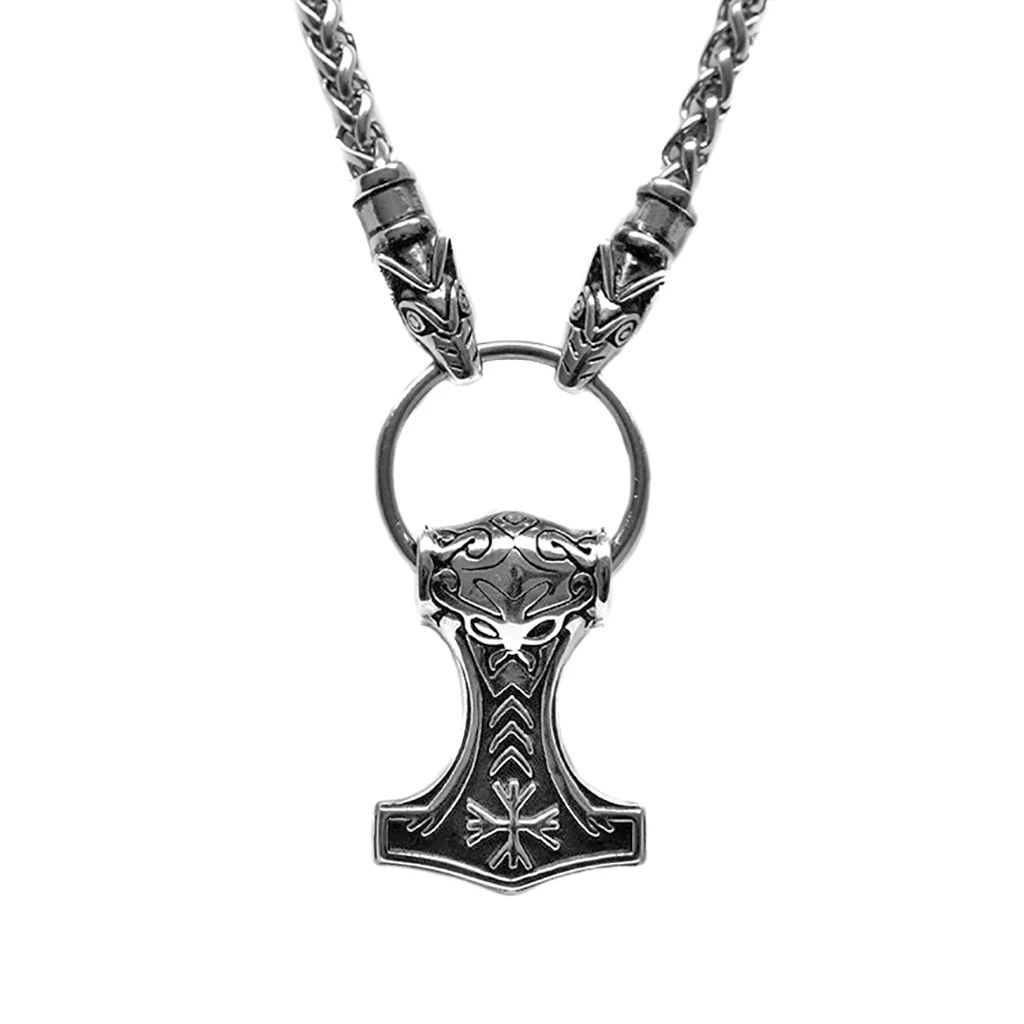
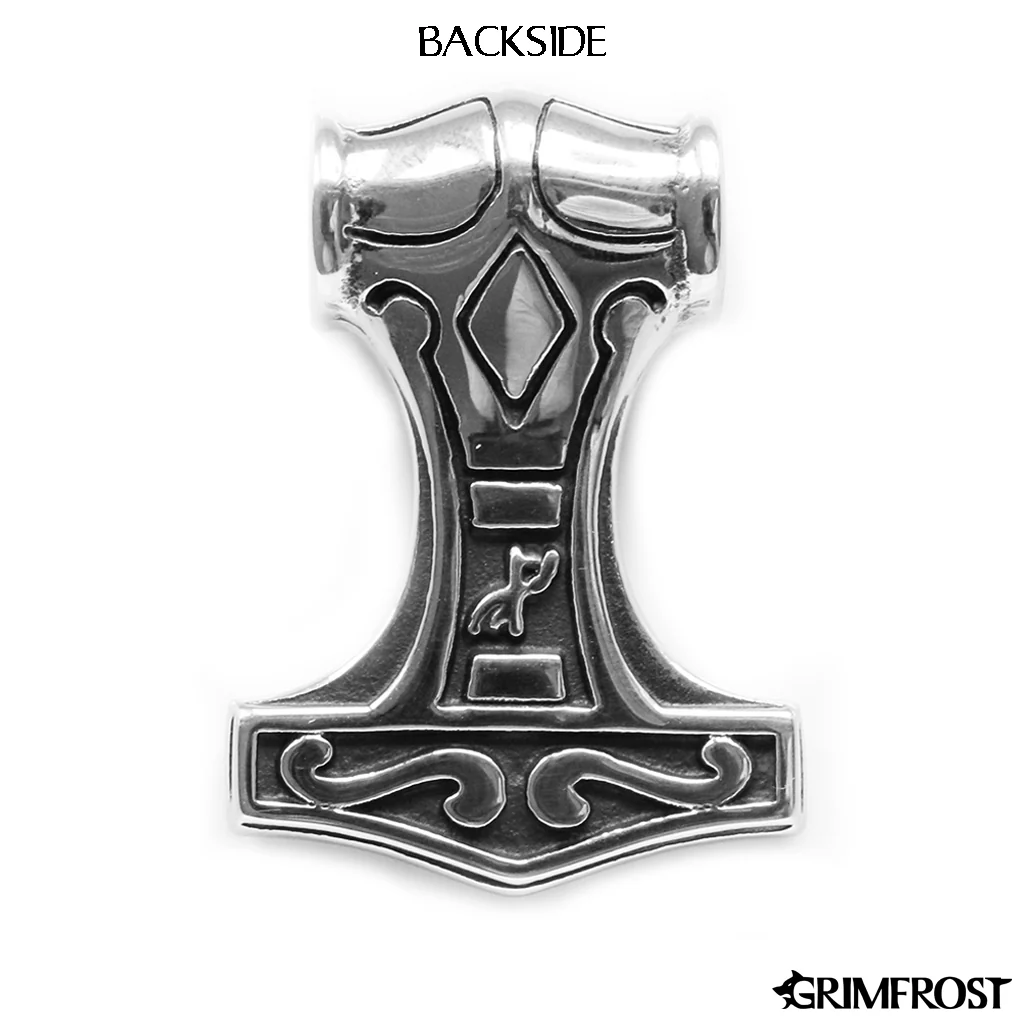
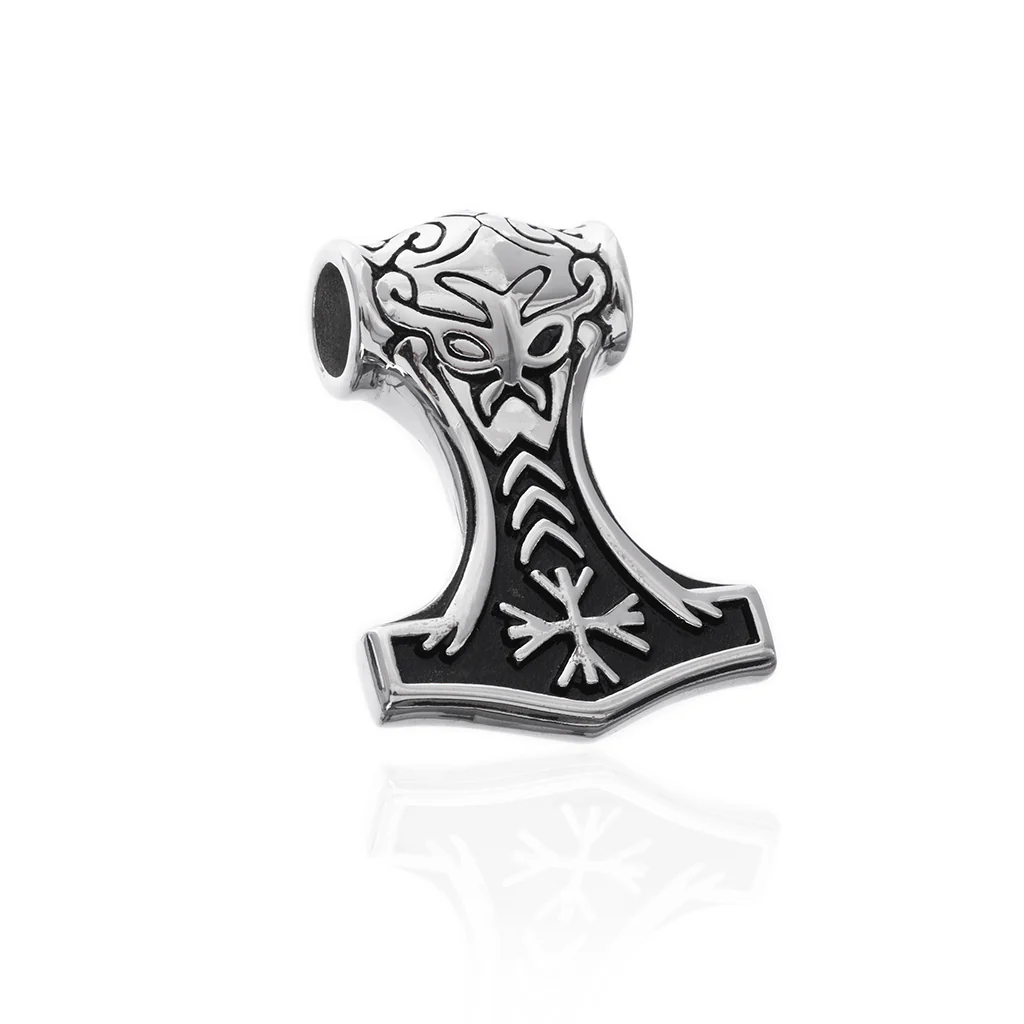
A custom, contemporary design inspired by authentic Viking artifacts. Made out of stainless steel, it depicts the mask of one-eyed Odin and the Ægishjálmur symbol. Also known as the 'Helm of Awe', it is an old magical symbol that induces fear in enemies and protects against abuse of power. Production and copyrighted design by Grimfrost.
- Size: 44 x 30 mm
- Diameter of hole: 8 mm
- Material: Hypoallergenic Stainless Steel
- Chain not included
- Copyrighted design and production by Grimfrost
Mjölnir (English: Crusher), is the hammer of Thor, the Norse God of Thunder. An amulet depicting Mjölnir is known as a “Thor’s Hammer” and it was worn by the Vikings as an amulet of protection and power. Ægishjálmur (old norse: helm of awe/helm of terror) is mentioned in the old sagas, such as in the Völsunga Saga, where the dragon Fafnir wears one between his eyes. Scenes from the Völsunga Saga are depicted on a rune stone in Uppland Sweden that is dated to around the year 1000.
Product Information
Product Information
Shipping & Returns
Shipping & Returns
Description
A custom, contemporary design inspired by authentic Viking artifacts. Made out of stainless steel, it depicts the mask of one-eyed Odin and the Ægishjálmur symbol. Also known as the 'Helm of Awe', it is an old magical symbol that induces fear in enemies and protects against abuse of power. Production and copyrighted design by Grimfrost.
- Size: 44 x 30 mm
- Diameter of hole: 8 mm
- Material: Hypoallergenic Stainless Steel
- Chain not included
- Copyrighted design and production by Grimfrost
Mjölnir (English: Crusher), is the hammer of Thor, the Norse God of Thunder. An amulet depicting Mjölnir is known as a “Thor’s Hammer” and it was worn by the Vikings as an amulet of protection and power. Ægishjálmur (old norse: helm of awe/helm of terror) is mentioned in the old sagas, such as in the Völsunga Saga, where the dragon Fafnir wears one between his eyes. Scenes from the Völsunga Saga are depicted on a rune stone in Uppland Sweden that is dated to around the year 1000.